
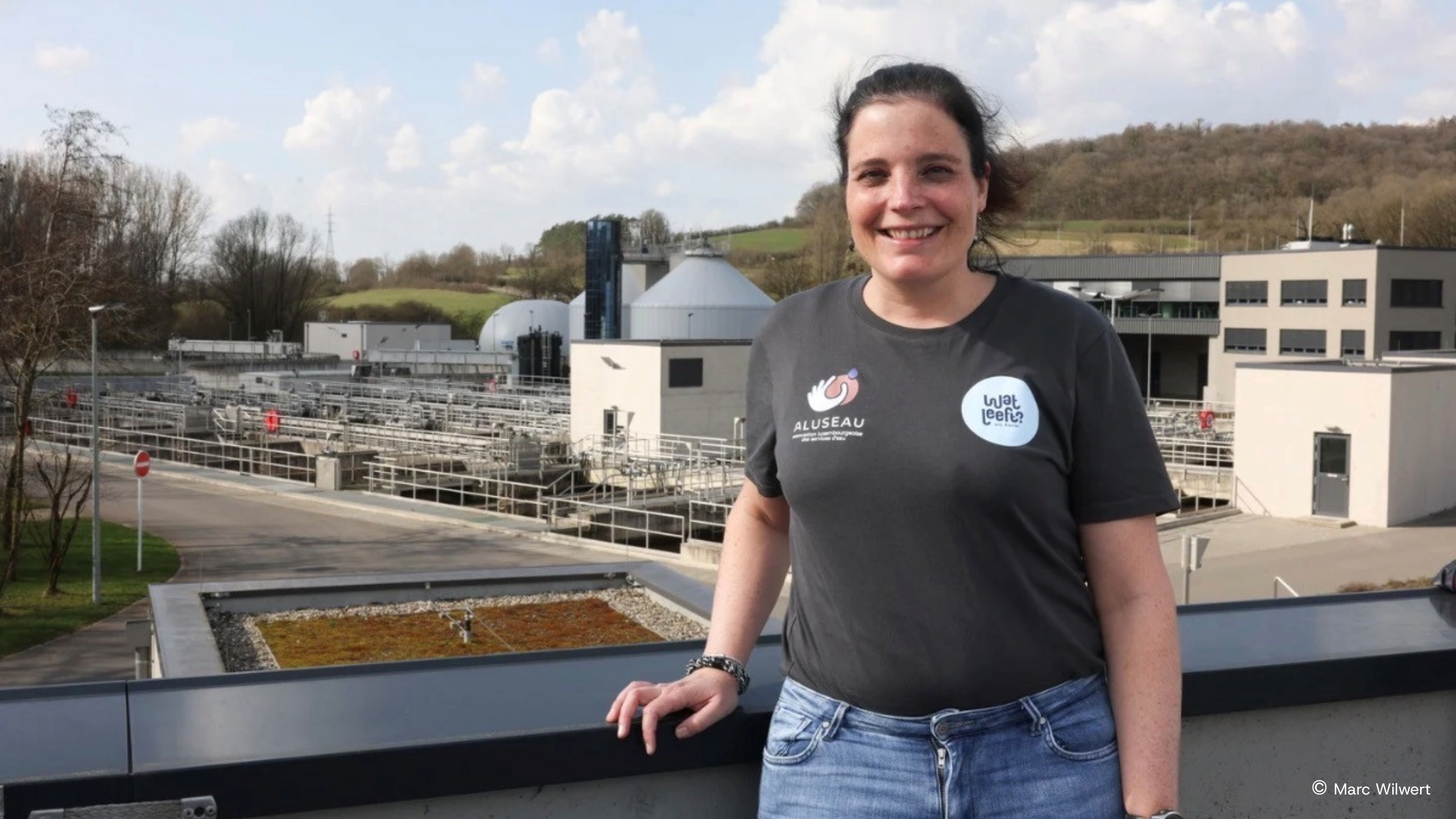
On 17 March, the Luxemburger Wort reported on the issue of waste being disposed of incorrectly in wastewater – as part of the “Wat leeft?” campaign, reporting directly from the SIACH wastewater treatment plant in Petingen.
What may seem convenient in everyday life can lead to significant costs in the long run. Time and again, wet wipes, medicines and other hygiene products are flushed down the toilet – with noticeable consequences for the sewerage infrastructure and, ultimately, for all residents.
Danièle Mousel, an environmental engineer at SIACH (Syndicat Intercommunal pour l’Assainissement du bassin de la Chiers) and a member of the “OfWaasser”-campaign working group, draws attention to this issue. “We repeatedly find that toilets are being used as waste bins – with serious consequences for our facilities,” explains Danièle.
Wet wipes are a particular problem
Wet wipes, in particular, cause major problems. They do not dissolve in water and become trapped in pipes and pumping stations. There, they form solid deposits that can lead to blockages, malfunctions, or even technical failures.
Significant technical and financial costs
Rectifying such faults is a complex process: pumps must be cleaned or replaced, pipes flushed, and parts of the system taken out of service. “These operations are time-consuming and involve high costs,” emphasises Danièle Mousel. In the long term, this affects the operation of the wastewater infrastructure and, consequently, the general public.
Medicines should also never be flushed down the toilet. Their active ingredients often cannot be completely removed at sewage treatment plants and therefore end up in the environment. “This pollutes our waterways and at the same time increases the technical demands of wastewater treatment,” Danièle adds.
In the end, everyone pays the price
The damage caused by improper disposal must be covered through maintenance work, repairs, and investment in infrastructure.
“What may seem like a minor issue in a private household has a major impact on the system as a whole,” she explains. Ultimately, the resulting costs affect all users of the sewerage network.
The campaign’s clear message
As part of the campaign, a clear message is being conveyed: only human waste and toilet paper should be flushed down the toilet.
Raising awareness is key
“Our aim is to prevent damage before it occurs through information and education,” explains Danièle. Every item of waste disposed of correctly helps to protect wastewater treatment systems and reduce environmental impact.
The campaign therefore urges the public:
The toilet is not a bin – acting responsibly protects the environment, infrastructure, and your own wallet.
You can read the full article in Luxemburger Wort (published on 17 March) here:
https://www.wort.lu/luxemburg/stadaland/feuchttuecher-und-medikamente-das-klo-hinunterzuspuelen-kostet-sie-richtig-geld/142214316.html