More treatment, stricter limits and greater responsibility for manufacturers: the new EU directive aims to better protect our water resources.
Whether we use the toilet, take a shower, do the laundry or wash the dishes, our everyday activities leave traces in our wastewater. Medicines, cosmetics and other chemical products also leave behind micropollutants that can enter the water cycle and affect rivers, lakes and other water bodies.
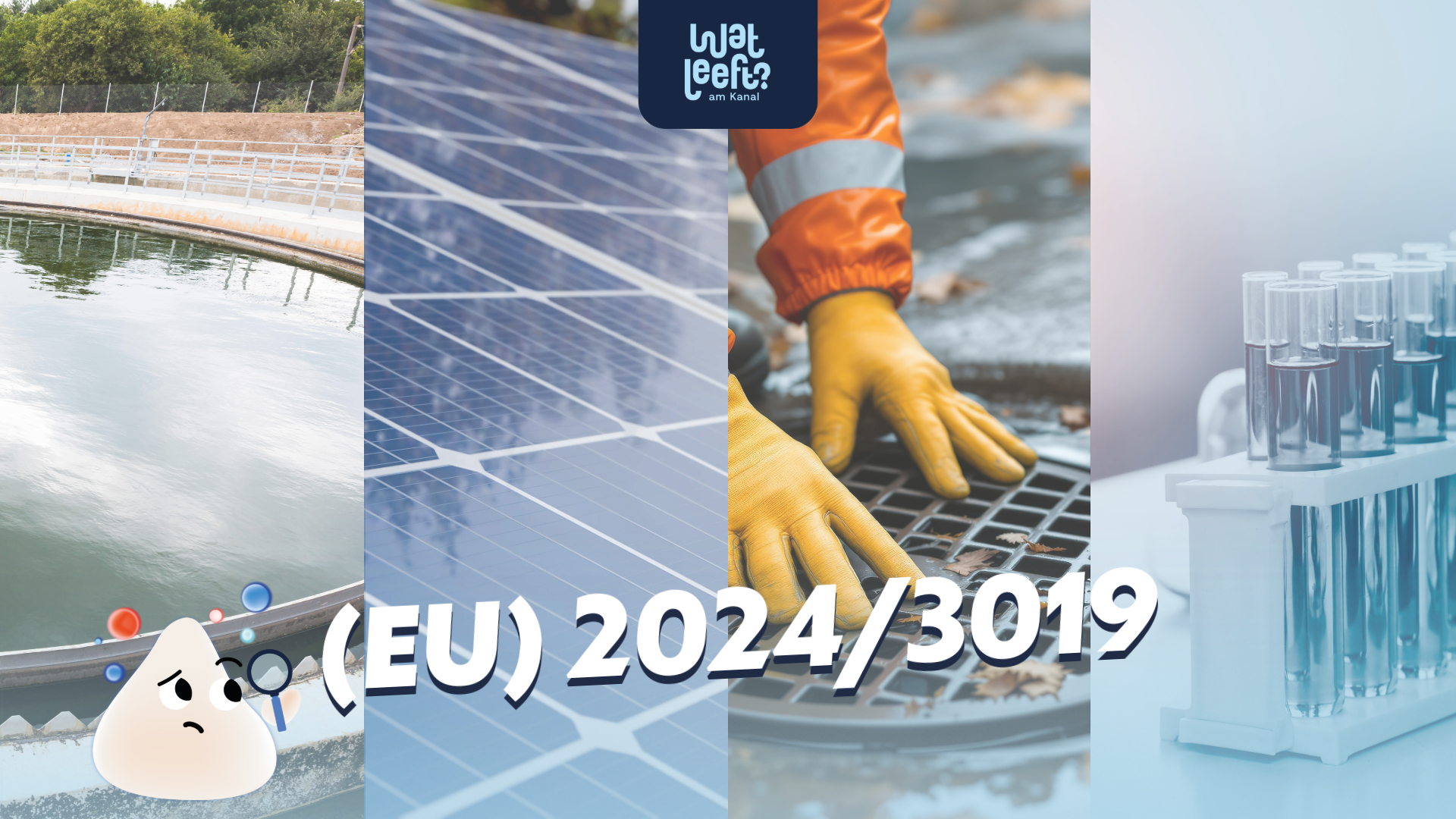
This is where the new EU Urban Waste Water Directive (EU) 2024/3019 comes in. It sets out how Europe will manage its waste water in future, who will pay for it, and how waste water can be used as effectively as possible to protect people and water bodies.
The Directive was adopted on 27 November 2024 and replaces the previous Directive 91/271/EEC of 1991.
A wider scope
The directive significantly lowers the threshold at which municipalities are required to collect and biologically treat urban wastewater. In future, these requirements will apply to agglomerations of 1,000 population equivalents (PE) and above, compared with 2,000 PE under the previous rules. A population equivalent does not simply refer to the number of inhabitants. It reflects the pollution load of the wastewater and therefore also takes into account discharges from businesses and industry.
Individual systems for collecting and treating wastewater will only be permitted in exceptional cases and must be recorded in a national register. Their use will also be more strictly regulated. Septic tanks with an overflow do not meet current technical standards and will therefore no longer be permitted.
Integrated urban wastewater management
Municipalities will have to draw up integrated wastewater management plans for larger agglomerations as well as for areas particularly exposed to risks associated with stormwater. These plans will set out measures to reduce pollution caused by combined sewer overflows and urban runoff during heavy rainfall. Wherever possible, priority should be given to nature-based solutions, such as green spaces, retention basins, soil filters and ponds.
Stricter limits for nutrients
In order to better protect water bodies from excessive nutrient loading, the limit values for nitrogen and phosphorus in treated effluent are being reduced. The new values are based on the current state of the technology.
The fourth treatment stage
Wastewater treatment plants serving a population equivalent of 150,000 or more, as well as plants in sensitive areas, will be equipped with an additional treatment stage according to a phased timetable. This fourth treatment stage removes organic micropollutants, substances that can contaminate water bodies even at very low concentrations. These include, among other things, residues from medicines, cosmetics and personal care products, as well as household and industrial chemicals. The necessary upgrades must be completed by 2045 at the latest
The polluter-pays principle: extended producer responsibility
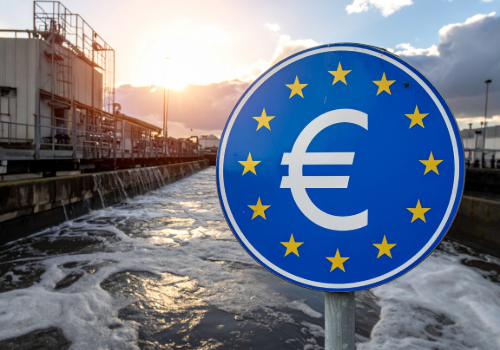
With extended producer responsibility, the EU is introducing a financial contribution from polluters for the first time. Manufacturers of products whose residues make the fourth treatment stage necessary will have to bear a significant proportion of the costs involved. These include investment and operating costs, the costs of data collection and verification, as well as other costs arising from the extended producer responsibility scheme. A dedicated organisation will be set up to oversee its implementation and administration.
Other key areas
- Energy. The urban wastewater treatment sector is to progressively move towards energy neutrality by 2045. Measures may include producing biogas, recovering heat from wastewater and increasing the use of renewable energy sources such as solar and wind power. Regular energy audits will help identify further opportunities to reduce energy consumption.
- Monitoring and public health. Monitoring will be expanded to include substances such as microplastics and PFAS. In line with the One Health approach, wastewater surveillance can also provide valuable information on pathogens and other health-related parameters, helping to identify emerging risks and protect public health.
- Circular economy. Greater emphasis will be placed on recovering valuable resources from wastewater and sewage sludge, particularly phosphorus, which is considered a critical raw material. The directive also promotes the safe reuse of treated wastewater, for example in agriculture, and measures to improve sewage sludge quality and facilitate its safe recovery and use.
- Social aspects. Access to safe and accessible sanitation is to be improved, with particular attention paid to vulnerable and marginalised groups, including women and girls, people with disabilities and people experiencing homelessness.
- Transparency. Wastewater management will become more transparent. Information on wastewater collection and treatment, costs, energy consumption and greenhouse gas emissions will have to be collected and made available to the public in a clear, accessible and user-friendly format.