
Better understanding leads to better action.
Our everyday actions directly influence water quality. Here’s how you can make a difference, simply, without complicating your life.
Every day, we use water without thinking about where it comes from or where it goes. However, once it has been drained away, it embarks on a long journey to the treatment plant. Good habits at home make all the difference: they facilitate the work of infrastructure, protect nature and reduce collective costs.
Common misconceptions about wastewater
Dispel the myths, discover the truth!
Everything that goes down the drain simply disappears.

Click to reveal the truth
Everything that goes down the drain simply disappears.
The sewerage network transports wastewater to the wastewater treatment plant, where it is treated. Wet wipes, grease and other products can block pipes. Foreign substances such as chemicals or medicines are not removed in wastwater treatment plants.


Wet wipes are like toilet paper – they dissolve, don’t they?
Click to reveal the truth
Wet wipes are like toilet paper – they dissolve, don’t they?
No. Even so-called biodegradable wet wipes are usually made of tear-resistant synthetic fibres and cause blockages, damage to pumps and the formation of ‘fatbergs’ (clumps of fat).
Chemicals are completely eliminated in wastewater treatment plants anyway.
Click to reveal the truth
Chemicals are completely eliminated in wastewater treatment plants anyway.
Only partially. Many micropollutants such as cleaning products, household products, medicines, hormones, pesticides or PFAS are difficult to break down – even with quaternary treatment, which has only been available in very rare cases to date.
My volume of wastewater is so low that it makes no difference.
Click to reveal the truth
My volume of wastewater is so low that it makes no difference.
It is the cumulative effect that counts: small quantities of inappropriate substances (oil, paint, medicines, cigarettes, car cleaning products, etc.) can have major consequences when thousands of households dispose of them incorrectly.
A wastewater treatment plant works like a swimming pool filter – everything is simply filtered.
Click to reveal the truth
A wastewater treatment plant works like a swimming pool filter – everything is simply filtered.
The treatment is based on mechanical, biological and chemical processes, and is not limited to simple filtration. In addition to solids, dissolved substances must also be removed, which filters are not designed to do.
After treatment at a wastewater treatment plant, the wastewater is of drinking water quality.
Click to reveal the truth
After treatment at a wastewater treatment plant, the wastewater is of drinking water quality.
No. The wastewater is treated, but it is not usually converted into drinking water. Treated wastewater is significantly cleaner than raw wastewater, but it is not of drinking quality. After treatment, it is discharged into rivers or streams.
Everything I throw into the drain goes to the wastewater treatment plant anyway.
Click to reveal the truth
Everything I throw into the drain goes to the wastewater treatment plant anyway.
False. Street drains usually lead directly to the nearest watercourse, not to a wastewater treatment plant. Cigarette butts, oils, paints, etc. are therefore extremely harmful to the environment.
Toilet products, descalers, disinfectants – all of these are safe.
Click to reveal the truth
Toilet products, descalers, disinfectants – all of these are safe.
In large quantities, acidic cleaning products can damage pipes, while aggressive or highly disinfectant products can damage the biological processes of the treatment plant, as they can destroy the bacteria that are essential for biological treatment.
If there are unpleasant smells, it is the fault of the sewage treatment plant.
Click to reveal the truth
If there are unpleasant smells, it is the fault of the wastewater treatment plant.
Treated wastewater does not emit unpleasant odours. Odour problems can occur in sewers, for example due to deposits, poor connections or low water flow, especially in hot, dry weather.
Wastewater treatment is free of charge – the government takes care of it.
Click to reveal the truth
Wastewater treatment is free of charge – the government takes care of it.
Wastewater treatment is technically complex and costly. Its operation, maintenance, energy and investment costs are financed by wastewater charges and taxes paid by the population. Careful wastewater management helps to limit these costs.
Microplastics come solely from cosmetic products.
Click to reveal the truth
Microplastics come solely from cosmetic products.
Cosmetics are just one source among many. Most microplastics come from textile fibres, tyre abrasion, shoe soles, paints and varnishes.
In the wastewater treatment plant, it is the stream that is cleaned.
Click to reveal the truth
In the wastewater treatment plant, it is the stream that is cleaned.
In Luxembourg, there are no treatment plants installed directly on watercourses. Wastewater from households and businesses is transported via the sewerage network to the wastewater treatment plant, and the treated water is then discharged into the watercourse.
We can easily do without wastewater treatment.
Click to reveal the truth
We can easily do without wastewater treatment.
For many, wastewater disposal and treatment are now taken for granted, but their immediate usefulness is not always apparent. Without wastewater treatment, not only would rivers and streams be heavily polluted, but the population would also be exposed to hygiene problems.
But on television, we can clearly see that medicines are also flushed down the toilet.
Click to reveal the truth
But on television, we can clearly see that medicines are also flushed down the toilet.
In films and television series, medicines are often flushed down the toilet for dramatic effect. This image symbolises a break with the past or a new beginning, but it does not reflect reality. In reality, medicines should not be flushed down the toilet or poured down the sink, as sewage treatment plants cannot completely eliminate many active ingredients, which pollutes the water. Unused medicines should be returned to the chemist’s or to official collection points.

Did you know?
86% of residents are willing to change their habits, but few know where to start.
15 smart tips for a more sustainable home
Small changes, big effects.
1. Recycle cooking oil
Cooking oil does not disappear when poured down the sink. As it cools, it solidifies, sticks to the walls of the pipes and can cause significant blockages in the sewerage system.

The right solution / the right action:
Pour the cooled cooking oil into a sealed container and take it to the recycling centre.

If this gesture is not respected…
Oil solidifies in pipes, accumulates as greasy deposits, clogs the network, and disrupts the operation of treatment plants. These issues lead to complex cleaning operations and high costs.
2. Use leftovers from cooking
The water used to cook pasta or rice contains minerals and starch. Instead of being poured down the sink, it can be reused in useful ways, while avoiding unnecessary strain on the drains.
The right solution / the right action:
Allow the cooking water (pasta, rice, vegetables) to cool and use it to water your plants, trees or vegetable garden.
If this gesture is not respected…
Large quantities of water loaded with starch and nutrients are unnecessarily sent into the drains, increasing the load to be treated by wastewater treatment plants.
3. Maintain your sink naturally
Chemical drain cleaners and disinfectants are very aggressive. They can damage pipes, pollute wastewater and disrupt the micro-organisms that are essential to the functioning of sewage treatment plants.
The right solution / the right action:
Use natural solutions such as bicarbonate of soda and white vinegar. Leave to work, then rinse with hot water: it’s effective, economical and more environmentally friendly.
If this gesture is not respected…
Chemicals damage pipes, disrupt wastewater treatment and increase pollution discharged into aquatic environments.
4. Install a sink or shower filter
Hair, food scraps and small solid waste easily end up in drains. As they accumulate, they form blockages that prevent water from flowing freely.
The right solution / the right action:
Install a simple filter or grid in the sink or shower. Clean it regularly to prevent solid waste from entering the sewer system.
If this gesture is not respected…
Pipes become blocked more quickly, leading to network malfunctions and more frequent use of chemicals or costly interventions.
5. Avoid microplastics
Microplastics are present in many everyday products, including certain cosmetics and hygiene products. Invisible to the naked eye, they pass through wastewater treatment plants and end up in rivers, then in the food chain.
The right solution / the right action:
Choose cosmetics without plastic beads or polymers. Check the labels and avoid ingredients such as polyethylene (PE), polypropylene (PP), polyacrylate or PMMA. Natural alternatives exist, made from fruit pits, sugar or clay.
If this gesture is not respected…
Microplastics pass through wastewater treatment systems, cause long-term pollution of aquatic environments and accumulate in living organisms.
6. Wash your car at a car wash
Washing your car at home releases water contaminated with hydrocarbons, heavy metals, grease and chemicals directly into the soil and drains.
The right solution / the right action:
Choose car washes: the water is collected, filtered and treated before being discharged. Some car washes even recycle some of the water used.
If this gesture is not respected…
Pollutants end up directly in the environment, contaminating soil and waterways, and escape treatment at sewage treatment plants.
7. Return expired medicines to the pharmacist.
Medicines contain active substances which, once in water, are not completely eliminated by conventional treatment processes. These substances can disrupt aquatic organisms and remain in the environment for a long time.
The right solution / the right action:
Take expired or unused medicines to the pharmacist. They will be collected free of charge and disposed of in a secure and appropriate manner.
If this gesture is not respected…
Drug residues end up in waterways, disrupting aquatic ecosystems and potentially causing long-term effects on wildlife.
8. Reduce chemicals in the household
Many household, cosmetic and hygiene products contain persistent chemicals. Some of these products end up in drains, where they are difficult, if not impossible, to remove completely in sewage treatment plants.
The right solution / the right action:
Choose eco-labelled, natural or solid products, and limit the number of products you use. A mild soap can often replace several bottles. Take leftover nail varnish, solvents or hair dye to the recycling centre.
If this gesture is not respected…
Chemicals accumulate in wastewater, pollute aquatic environments and complicate the work of treatment plants.
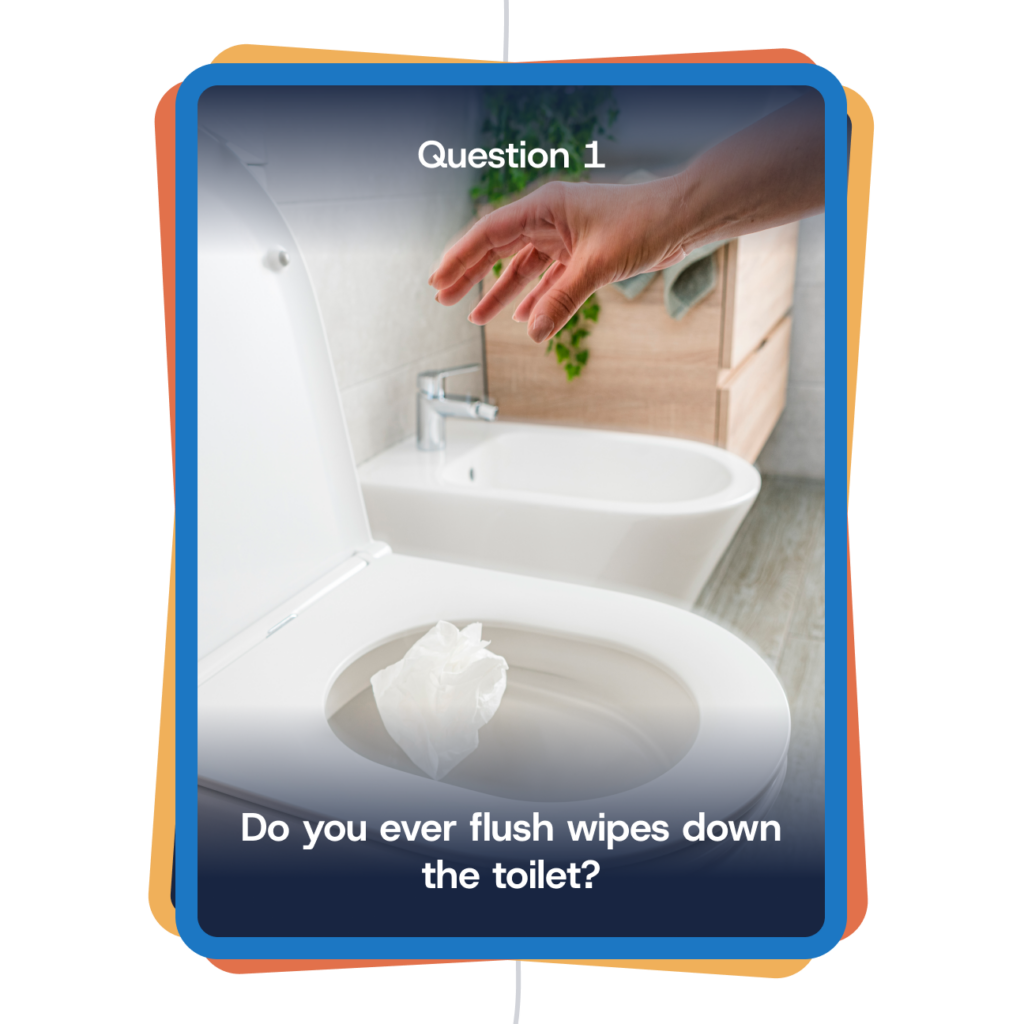
9. Do not flush wet wipes down the toilet.
Wet wipes do not dissolve in water. They accumulate in pipes, block pumps and disrupt the operation of sewage treatment plants.
The right solution / the right action:
Wet wipes – including those labelled ‘biodegradable’ – should always be disposed of in residual waste.
If this gesture is not respected…
This leads to blockages, costly repairs and malfunctions in the sanitation infrastructure.
10. Use less water when washing and showering
The greater the amount of water used, the greater the demand on sewerage networks and treatment plants, particularly during peak hours and heavy rainfall.
The right solution / the right action:
Take shorter showers and turn off the water when it is not needed.
If this gesture is not respected…
Wastewater treatment plants are unnecessarily burdened by water that does not require treatment, resulting in additional costs that are ultimately passed on to the public.
11. Do not pour paint, solvents or chemicals down the drain.
These substances are toxic to the micro-organisms that treat water in wastewater treatment plants.
The right solution / the right action:
Take paints, solvents and chemicals to collection points or the recycling centre.
If this gesture is not respected…
Harmful substances can disrupt purification processes, end up in waterways and pollute the environment.
12. Only run the washing machine when it is full and use the correct amount of detergent.
Each wash cycle consumes water and energy and releases detergent residues and microfibres.
The right solution / the right action:
Only start the washing machine when it is full and follow the instructions for the correct amount of detergent.
If this gesture is not respected…
An unnecessarily high quantity of wastewater and pollutants is being transported to the treatment plant.
13. Do not throw cigarette butts on the street or in drains.
Cigarette filters contain plastic and toxic substances that pollute water.
The right solution / the right action:
Dispose of cigarette butts in an ashtray or bin. Or do not smoke.
If this gesture is not respected…
Pollutants end up directly in streams and rivers without any treatment.
14. Wipe off the pain relief ointment with a paper towel before showering.
Pain relief ointments often contain medicinal substances that pollute aquatic environments and cannot be removed by sewage treatment plants.
The right solution / the right action:
Before showering, wipe off any remaining pain relief ointment with a paper towel and dispose of it in the general waste.
If this gesture is not respected…
The wastewater treatment plant and waterways are unnecessarily polluted with drug residues, which can have harmful effects on the environment.
15. Choose PFAS-free products
PFAS, also known as “forever chemicals”, are not sufficiently eliminated in wastewater treatment plants and can therefore end up in aquatic environments.
The right solution / the right action:
Where possible, choose PFAS-free products (clothing, kitchen utensils, cosmetics).
If this gesture is not respected…
PFAS pass through the wastewater treatment plant, reach aquatic environments and accumulate there.
Quiz
Test your habits with this questionnaire!
Some actions seem harmless… until they block a pipe.
Because good reflexes can prevent a lot of damage… check whether you already have the right ones, or whether some need to be improved.
Take part in our quiz and test your reflexes.
The butterfly effect of our habits
Every action counts… sometimes much more than we imagine.

600 litres
can be contaminated by a single drop of oil.
Even very small quantities of oil are enough to contaminate large bodies of water. When poured down the sink, oil clogs pipes and greatly complicates treatment at sewage treatment plants.

135 litres
of drinking water are consumed on average per person per day in Luxembourg.
Most of this water is not drunk, but used for showering, flushing toilets, washing and cleaning. Every litre saved reduces the amount of wastewater that needs to be treated.

3 to 5 litres
only really serve to drink and cook with every day.
The rest is used for our daily comfort. This shows how significant the potential for water savings is, without compromising on quality of life.

Up to 600 years
so that the plastic degrades in the environment.
Once in the water, plastic slowly breaks down into microplastics, which are very difficult to remove. They end up in rivers, lakes and the food chain.

1 tablet
can contaminate thousands of litres of water.
Wastewater treatment plants cannot completely eliminate drug residues. These substances persist in the water and affect aquatic fauna and flora.

30%
of chemical pollutants in domestic water come from cleaning products.
Detergents, disinfectants and softeners contain substances that are harmful to the bacteria responsible for the biological purification of water.

Up to 20%
of a municipality’s electricity is used to treat wastewater.
Pumping, aeration, filtration… the more polluted the water, the more energy the treatment process consumes. Wastewater treatment plants are among the largest consumers of electricity in municipalities.

€800 to €1,200
per year for water and wastewater, on average per household in Luxembourg.
Water must be collected, transported and treated. Responsible consumption and good habits can reduce the volumes to be treated… and the bill.
See our FAQs
What happens to my wastewater in Luxembourg after it disappears down the drain?
In Luxembourg, your wastewater is transported via the municipal sewerage system to a treatment plant in your region, operated by the municipality or an intermunicipal syndicate. There, it is treated before being discharged into rivers such as the Alzette, Chiers, Moselle, Sûre or their respective tributaries.
What is a sewage treatment plant and what is it used for?
A wastewater treatment plant treats wastewater using mechanical, biological and chemical processes before discharging it into the natural environment. In this way, it protects our rivers, groundwater and, ultimately, our drinking water sources.
Can the treatment plant remove all pollutants from the water?
No. Certain substances such as micropollutants (medicines, certain chemicals, hormones, cosmetic residues) and microplastics can only be removed partially or at great expense. It is therefore important to prevent these substances from entering wastewater.
What happens in case of heavy rainfalls?
During heavy rainfall, large quantities of additional water can flow into the sewers. To prevent overloading, wastewater is temporarily stored or discharged in a controlled manner. In new residential areas in Luxembourg, separate systems must be installed to ensure that rainwater is not conveyed to the wastewater treatment plant.
What is wastewater?
The term “wastewater” refers to water that has been altered by its use in households, businesses and agriculture (sewage), as well as rainwater from impermeable surfaces.
Why does wastewater treatment cost money?
Sewers, pumping stations and sewage treatment plants must be built, maintained and operated. The operation of sewers and sewage treatment plants is technically complex and energy-intensive. Repairs, maintenance and modern cleaning techniques incur costs that can be reduced through responsible behaviour.
Why do I have to return my medicines to the chemist's or take them to the waste disposal centre?
Medicines contain active substances that are difficult to break down in sewage treatment plants. When they are discharged with wastewater, they end up in rivers, where they can harm animals and plants, and even enter the food chain and contaminate our food.
Why do I have to wash my car at a car wash?
Car washes treat residual waters appropriately and have a lower water consumption. The produced wastewater is connected to the wastewater treatment system.
On the opposite, when washing on public roads or in private driveways, substances such as oils, particles from tyre wear and heavy metals can often end up directly in the environment, as these facilities are frequently connected to the rainwater sewer of a separate sewer system, which flows directly into water bodies.
Who is in charge of wastewater in Luxembourg?
In Luxembourg, responsibility for wastewater treatment lies with the municipalities. However, with a few exceptions, they have transferred this task to intermunicipal syndicates. These are public establishments for municipal cooperation in which several municipalities jointly operate sewerage networks, sewer overflows, treatment plants and pumping stations. These associations enable the pooling of technical expertise and resources. They are also often relevant from a geographical point of view, as many wastewater treatment plants are connected to agglomerations covering several municipalities.
Notable exceptions are the city of Luxembourg and the municipality of Hesperange: these municipalities manage their own sewer networks and operate their own wastewater treatment plants through their technical services.
At national level, the State defines the legislative framework on the basis of European directives and monitors water quality.
Why does wastewater concern us all?
Clean water is essential for health, nature and quality of life. A look back at the Middle Ages clearly shows the consequences of a lack of targeted sewage disposal and treatment in towns and cities: diseases and epidemics were able to spread unchecked.
Beyond health considerations, wastewater treatment is also of central importance for environmental protection. Wastewater is part of a cycle: what we produce in our homes ends up in our rivers, in nature and, ultimately, back in our drinking water.
Can I visit a wastewater treatment plant in Luxembourg?
Yes. Several wastewater treatment plants and sanitation associations in Luxembourg offer free guided tours, particularly for schools, associations, local authorities and interested groups.
These visits provide a practical insight into how wastewater is treated and why responsible behaviour in everyday life is so important.
Information about visits can be obtained:
- at the local municipality
- with the wastewater syndicate in charge
- or as part of national information and awareness campaigns, for example here on the website.
What does the term 'population equivalent' mean?
The concept of population equivalent (PE) describes the daily amount of wastewater per capita, either in terms of volume or degree of pollution. This unit allows wastewater from craft, commercial or industrial activities to be equated with domestic wastewater corresponding to a given number of inhabitants.
The population equivalent is used in particular for assessing and sizing the capacity of wastewater treatment plants. A wastewater treatment plant is designed for a certain number of population equivalents (PE); this value corresponds to the sum of the connected inhabitants and the population equivalents associated with non-domestic discharges.
How is wastewater treatment regulated by law?
The European Directive on urban wastewater treatment (DERU, Directive 2024/3019) replaces the previous directive (91/271/EEC) and sets out the rules applicable across the European Union for the collection, treatment and discharge of urban waste water. It is currently being transposed into Luxembourg law.
Compared to the previous directive, the new directive now also applies to treatment plants with a population equivalent of 1,000 or more (compared to 2,000 previously). The introduction of quaternary treatment necessary for the removal of micropollutants present in urban waste water for certain treatment plants is included in the directive.
The directive also introduces an obligation for municipalities to draw up integrated urban waste water management plans and to reduce discharges of inadequately treated water (combined sewer overflows). The requirements for reducing nutrients, in particular nitrogen and phosphorus, are adapted to recognised rules of technology.
Finally, the directive sets the objective of achieving energy neutrality for wastewater treatment plants by 2045.
Why is it important to be careful about what I flush down the toilet and drain?
Everything that ends up in the drains must be transported to the treatment plant for processing. Certain substances, such as medicines and chemicals, are difficult or even impossible to remove and cause damage and high costs. Other substances, such as fats and wet wipes, can cause problems such as blockages and fat deposits on their way to the treatment plant, i.e. in the sewers.
Can I flush wet wipes down the toilet if they are 'biodegradable'?
No. Even “biodegradable” wet wipes do not dissolve quickly enough in water. They must always be disposed of with residual waste.
Why should I not pour cooking oil and grease down the drain?
Fat solidifies as it cools, settles in pipes and causes blockages. This leads to damage to pipes and malfunctions in sewage treatment plants.
Can I throw my cigarette butts into a drain?
No. Most drains are connected to the rainwater drainage system and carry water directly to streams or rivers. Cigarette butts therefore end up directly in the natural environment.
The ideal solution is, of course, to give up smoking altogether.
What can I personally do to relieve the burden on sewage treatment plants?
Even small measures can help: do not pour grease down the drain, do not flush wet wipes down the toilet, use cleaning products sparingly, dispose of medicines properly and use water responsibly.